Game room · 4 min read
Game Room Layout Guide: Clearance for Every Game Table
Plan your game room layout. Clearance charts for pool, shuffleboard, ping pong, air hockey, foosball and arcade, plus lighting and power tips.
Updated November 4, 2026 · Grand Game Room specialists
The best game rooms feel effortless: players have room to shoot, guests have a place to sit and nobody gets elbowed by a cue. That comes from planning. This guide gives clearance numbers for every major game table, shows how to combine them, and covers lighting, power, flooring and seating. Use it with our room size tool, or book a free consultation.
Step 1: Measure the Room
- Measure the room wall to wall at floor and hip height.
- Note doors (and their swing), windows, stairs, posts, radiators, vents and outlets.
- Measure ceiling height, especially in basements with ducts or beams.
- Sketch the room on graph paper or in a free floor planning app, at a scale such as 1 square = 1 ft.
Step 2: Know Each Table's Clearance Zone
Every game has a footprint (the table) and a play zone (space needed for players). Play zones may overlap walkways occasionally but should never overlap each other.
| Game | Typical table size | Clearance needed | Typical room |
|---|---|---|---|
| Pool table, 8 ft | about 51 x 95 in | about 58 in (one cue length) from the playing surface on all sides | about 13 ft 4 in x 17 ft |
| Shuffleboard, 14 ft | about 14 ft x 2 ft | 2 to 3 ft at each end, 3 ft on one side | about 18 to 20 ft x 6 ft |
| Ping pong | 9 x 5 ft | 5 ft or more behind each end, 3 ft each side | about 19 x 11 ft |
| Air hockey, 7 ft | about 84 x 48 in | 3 to 4 ft each end, 2 to 3 ft each side | about 13 x 9 ft |
| Foosball | about 56 x 30 in | 3 to 4 ft each long side, 2 ft each end | about 9 to 11 x 8 ft |
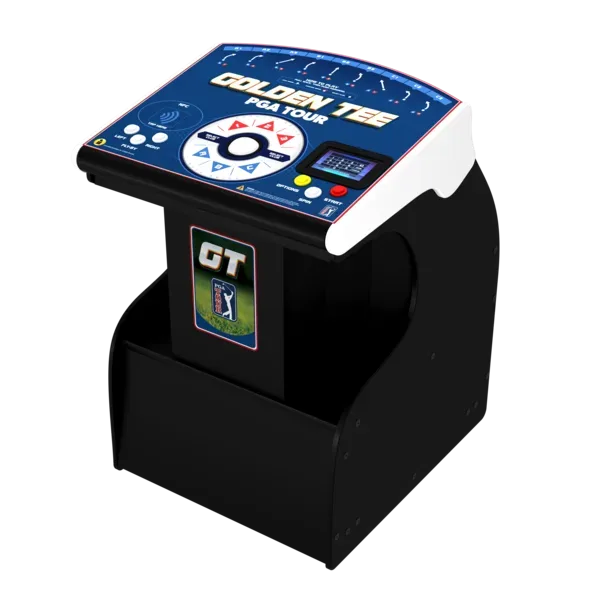
| Arcade cabinet | about 2 to 3 ft wide x 2.5 to 3 ft deep | 3 ft in front for player | about 3 x 6 ft each |
| Pinball machine | about 2.5 ft wide x 4.5 to 5 ft deep | 3 ft in front, a few inches behind | about 3 x 8 ft each |
| Poker / card table | about 4 to 8 ft | about 3 ft around for chairs | varies |
Dimensions vary by model; always check the spec sheet. For pool, see the detailed pool table room size guide. For shuffleboard, see the shuffleboard length guide.
Step 3: Choose an Anchor
Most rooms have one centerpiece table, usually a pool table, and supporting games around it.
Pool table as anchor
Center it under the light with its long axis following the long side of the room. Supporting games go along walls, outside the cue zone.
Shuffleboard as anchor
Shuffleboards love long walls. They leave the middle of the room open for seating or a bar.
Ping pong as anchor
Ping pong needs the most open floor. A folding table can be rolled aside for parties.
Step 4: Fit Supporting Games Along Walls
Arcade cabinets and pinball machines take little floor space and work well along walls, in corners or under stairs. Grouping them creates an "arcade corner." Keep them out of cue zones: a cabinet at the wall is fine if the cue swing still clears it, but not if a player has to stand where the cabinet is.
Foosball and air hockey fit in smaller areas and can sit near seating areas because play is fast and compact. For tight spaces, a multi-game table combines several games in one footprint.
Sample Layouts
Basement, 14 x 20 ft
- 8 ft pool table centered.
- Two arcade cabinets in a corner outside the cue zone.
- Bar ledge on the long wall with stools that tuck under.
Bonus room, 12 x 16 ft
- 7 ft pool table with a short cue for one tight side, or
- Air hockey plus foosball with a small seating area.
Large game room, 20 x 30 ft
- 9 ft pool table on one half.
- 16 ft shuffleboard along the long wall.
- Ping pong or air hockey on the other half.
- Arcade and pinball row.
Garage or patio
- Outdoor ping pong table.
- Outdoor foosball or a weatherproof game.
Step 5: Lighting
- Pool tables: a dedicated fixture hung about 30 to 36 inches above the playing surface, sized to cover most of the table.
- Shuffleboard: even overhead light along the full length, often a long linear fixture.
- Ping pong: bright, even, glare-free lighting; avoid lights directly behind players' sightlines.
- Arcade and pinball: dimmer ambient light makes screens and backglasses pop; add accent lighting.
- Dimmers let one room go from tournament night to movie night.
Step 6: Power and Electrical
- Arcade cabinets, pinball machines, air hockey blowers and electronic scorers all need outlets.
- Place outlets near planned machine locations to avoid extension cords across walkways.
- Several machines on one circuit can trip a breaker; ask an electrician whether a dedicated circuit is wise.
- Surge protectors help protect electronics.
Step 7: Flooring
- Carpet softens sound and protects dropped balls but can let heavy tables settle.
- Hardwood or LVP looks great; use furniture pads or a rug under tables.
- Concrete is ideal for heavy slate tables; add a rug for comfort.
- Rubber or foam tiles work well in ping pong and arcade zones.
Step 8: Seating, Storage and Extras
- Seating should sit outside play zones. Tall chairs or stools along a wall give spectators a view.
- Cue racks mount on walls outside the cue swing.
- Storage for balls, paddles, pucks and covers keeps the room tidy.
- Sound: game rooms get loud. Rugs, upholstered seating and acoustic panels help.
- Bar or beverage area: keep drinks away from cloth and electronics, with ledges or tables nearby.
Common Layout Mistakes
- Buying the table before measuring.
- Forgetting door swings and stair landings.
- Letting two play zones overlap.
- Hanging a pool light off-center.
- Running extension cords across walkways.
- Ignoring the delivery path for long or heavy items.
Sources
- World Pool-Billiard Association (WPA) equipment specifications: wpapool.com
- International Table Tennis Federation (ITTF) technical specifications: ittf.com
- Manufacturer specification sheets on individual product pages at grandgameroom.com
Frequently asked questions
How big should a game room be?
A room around 14 x 20 ft fits an 8 ft pool table plus a few supporting games. Smaller rooms work well with foosball, air hockey, arcade cabinets or a multi-game table.
Can I put a pool table and ping pong table in the same room?
Yes, if the room is large enough that the cue zone and the ping pong play area do not overlap. Some multi-game and conversion tops let you switch between games on one table.
Where should arcade machines go in a game room?
Along walls or in corners, outside other games' play zones, near outlets and away from direct sunlight that causes screen glare.
What is the best flooring for a game room?
Carpet or rugs soften sound and protect equipment; concrete is ideal under heavy slate tables. Many rooms combine hard flooring with large rugs.
How much space do you need around a foosball table?
About 3 to 4 ft on each long side for players and rod travel, and around 2 ft at each end.